Sunday, April 24, 2011

Transformations

POP CULTURE
 Plastic surgery is a growing epidemic in America. Bradley University has reported that “According, to the American Society for Aesthetic Plastic Surgery (ASAPS), in 2008, Americans underwent 10.2 million cosmetic procedures, paying out just under $12 billion (Mann 2009). While the general economic downturn has led to a slight decrease in such procedures, cosmetic surgery has increased dramatically in the last decade. In fact, while the majority of procedures are performed on women, men’s use of cosmetic procedures has increased 20% since the year 2000 (Atkinson 2008).” Furthermore, a trend in American pop culture is the rise in teen plastic surgery. Some, of you may say "Okay, and...so whats the big deal." 
ITS A BIG DEAL
Numerous research studies have highlighted the severe health risks involved in cutting the flesh. Dregu et al. (2009) studied six patients who underwent seemingly successful breast augmentations for aesthetic reasons; there were no complaints of pain after surgery, however 10 years later dense tumors were found in 5/6 patients. Today, there is a consensus among medical doctors that late complications can arise due to silicone implant failure, and is recommended to be medically addressed as soon as detected. While, it is known that cosmetic surgery has improved, there are still grave risks involved. Clark et al. (2008) found that multi-system organ dysfunction can arise after silicone injection; in their study two transsexual male’s sought out silicone injections in the hips and buttocks. After, receiving 1-2 liters of silicone injections, the two patients reported feeling “nauseated, lethargic, and then los[s] of consciousness.” Ultimately, one of the patients gradually recovered, while the other never regained neurological function and died. 
Furthermore,

Most cosmetic surgery procedures indicates an individual that is socially pressured by cultural ideas. Bradley University has stated that many people feel that “surgical interventions [are] sad indictment[s] of a culture with rigid and narrow ideas of beauty—a culture that values youth, sexuality and appearance more than experience, character and substance (Jeffreys 2000).” People who partake in these surgeries for non-therapeutic reason are more likely to be struggling with their body image. It seems to me that we must do something as community to promote self-confidence and to communicate to others the importance of loving ones’ self as they are. 

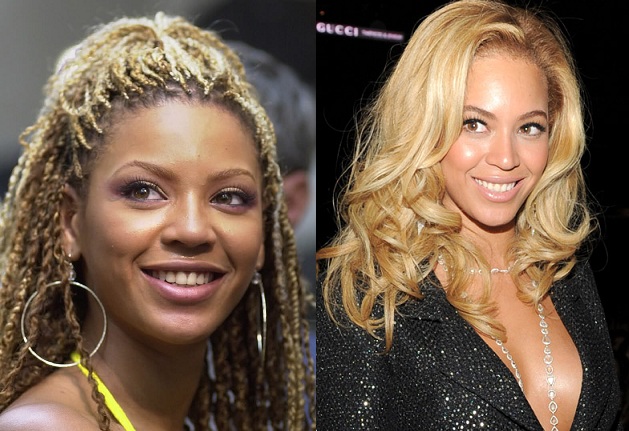
I understand that sometimes we don't feel as good about our appearance as we should; at times I feel that way, but there are actions that can be taken that are less risky like: changing the way you dress, changing your hair color/style, changing your body through exercise, etc. For example...

..take a look at these celebrity transformations.


Monday, March 14, 2011

The Perfect Fit

 FASHION
Wardrobe Guide 
to the Perfect Bra
Do you have a bra(s) in your closet that gets on your nerves every time you wear it; it's cute but it just doesn't fit right: you bend over and your goodies fall out the top of the cup; you reach up and they are falling out the bottom of the cup; or you take the bra off and you are extremely relieved? Chances are you're wearing the wrong size bra - and you probably already knew that, but what you don't know is  how to fix it. Well this post is meant to help you and everyone else - 80% of women - wear the wrong size bra.
Yes, I said 80%. According, to the experts (i.e.Tracy M. Pfeifer) 80% of women wear the wrong bra size; so, to highlight some signs that the bra you're wearing isn't your size here are some tips for a better fit: 


Recap of Video and Additional Tips: 
1. Spillage. If your breasts spill over the top or sides of your bra, increase the band and/or cup size.

2. Puckering. If cups wrinkle or pucker, choose a smaller size.

3. Riding up A bra should fit snugly. If it creeps up in the back, trade it in for one with a tighter band.

4. Jutting. The underwire isn't flush against your rib cage; it should be.

5. Grooves If straps dig into your flesh, try a style with wider straps or a different cup size -- either bigger or smaller.

Steps to Help You Measure for a Perfect Fit
1. Keep in mind that bra band sizes and cup sizes are proportional, so, by changing a band size, you will probably also change cup size. 

2. Run a tape measure all the way around your body just underneath your breasts and take a measurement in inches
a. Make sure the tape measure is horizontal and fairly snug. Your arms should be down. If this measurement is an odd number, round up to the nearest even number.
b. Now, add 4 to that number. For example, a 27 would become a 28. Then when you add 4,you're at 32. This number is your band size. 

3. Next, run a tape measure over the fullest part of your bust
a. Be sure to keep your arms at your sides (more or less) and be sure that the tape doesn't droop or   ride up in the back. The tape should be snug around you but not pinching at your skin at all.
b. Now round this number to the nearest whole number. Subtract the original measurement(below your bust), NOT your band size from this measurement of the fullest part of your bust. If the difference is 1, you're an A. 2, you're a B. 3, you're a C. 4, you're a D. 5, you're a DD. Et cetera.  
NOTE:The best way to ensure a perfect fit is to go to a specialty bra shop. Or get someone else to measure you.  

4. Find a comfy bra!  
a. If you are one to shop for bra's internationally, use the link listed to convert your US sized measurement attained from the steps above: http://www.85b.org/bra_conv.php 


SO, NOW THAT YOU ARE EQUIPPED WITH THE "KNOW HOW," BURN THOSE OLD BRAS THAT DON'T FIT YOU  


Monday, February 21, 2011

Do It Like A Dude This Spring

 This post further illustrates the "Do it Like a Dude" attitude first introduced in blog post Stigmatized Women in the Workplaceclick here, to read it!  

FASHION
This spring (2011) menswear is back in style. So you may want to begin pulling out the lightweight blazers, button ups as well as your pair(s) of oxfords, and - if you don't already have one - you may want to buy a Fedora hat; because these are just some of the trademarks that make the menswear fashionable for women. Below are stylish examples of the menswear trend.


The above images are from dsquared2's spring collection. To see more from them check out their official site at: http://www.dsquared2.com/
Related Posts Plugin for WordPress, Blogger...